Interactive Flag Quizzes
Test your knowledge with these interactive flag quizzes. Identify countries from their flags - from instantly recognisable designs to more challenging ones that will really make you think. See how many you can get right, then explore some fun flag facts below the quizzes.
Choose from 6 interactive flag quizzes and test how many countries you can identify.
Flags are packed with history and meaning. Colours, symbols, and patterns often reflect a country’s culture, geography, or past - which is why flag quizzes are such a popular and engaging way to test geography knowledge. These interactive quizzes range from easy recognisable flags to much more challenging ones designed to really test your memory and knowledge.
How the Interactive Flag Quizzes Work
Each quiz is played directly on the page. Simply select your answer for each flag using your mouse and see your score instantly at the end - no printing or downloading on this page.
The quizzes showcase a variety of world flags, from Africa to Europe, Asia to the Americas, with 12 flags of varying difficulty in each quiz. Our favourite flags are those of North Macedonia and the Seychelles, both of which break away from the usual tricolour designs. Other flags feature animals, buildings, and even weapons. One notable example is the flag of Mozambique, which has a red isosceles triangle containing a yellow star, an open book, and a crossed AK-47 rifle and hoe, symbolising the country's commitment to education, agriculture, and defence.
Flag Knowledge
Want to improve your flag knowledge? Scroll down to explore interesting facts about the Union Jack, Tricolour, and more. Otherwise, get really serious with our downloadable flag handouts - it’s starting to become a bit of a flag quiz hub.
| Flag | Interesting Facts |
|---|---|
|
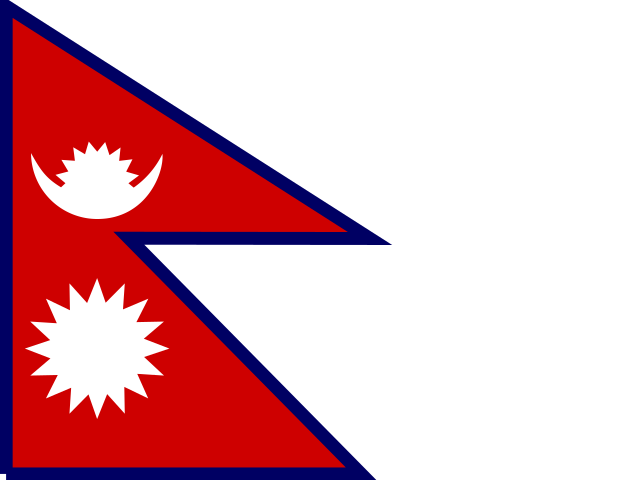
Nepal: The world’s only non-rectangular national flag, formed from two stacked pennants. Its sun and moon symbols represent permanence, harmony, and the resilience of the Himalayan region. The modern geometric construction was standardised in the 1960s, but the design draws on centuries of Hindu and Buddhist symbolism and historic royal banners. |
|
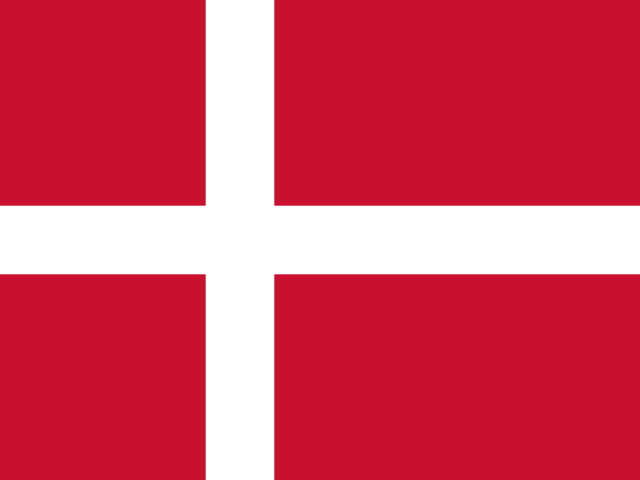
Denmark: The Dannebrog is widely considered the oldest continuously used national flag. Legend claims it fell from the sky during the Battle of Lyndanisse in 1219. Its white Nordic cross became the model for the entire family of Scandinavian flags that followed. |
|
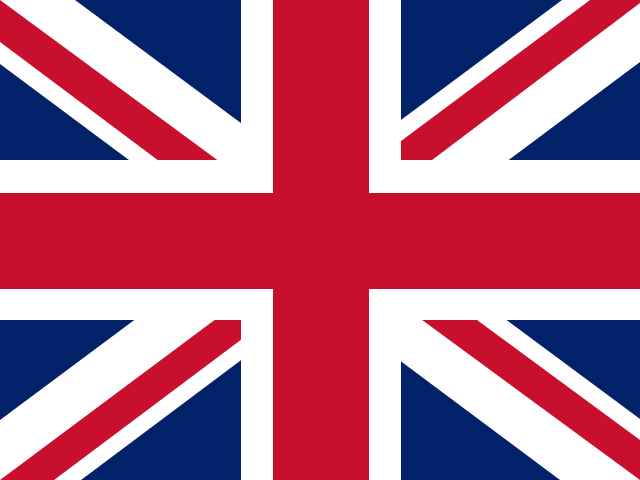
United Kingdom: Commonly known as the "Union Jack" (especially at sea), though officially the “Union Flag” on land. It layers the crosses of England, Scotland, and Ireland into a single asymmetric design that must be flown the correct way up. Despite its complexity, it remains one of the most recognisable flags in the world. |
|
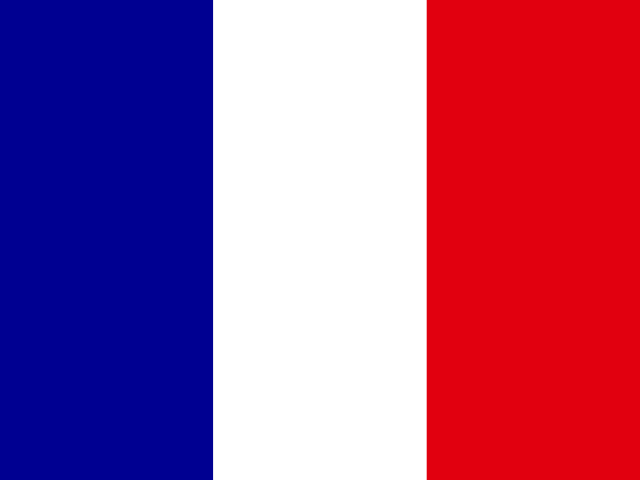
France: The tricolour emerged from the French Revolution and became a global emblem of republican ideals. Blue and red represent Paris, while white originally symbolised the monarchy and later unity. Its clean design influenced many national flags worldwide. |
|
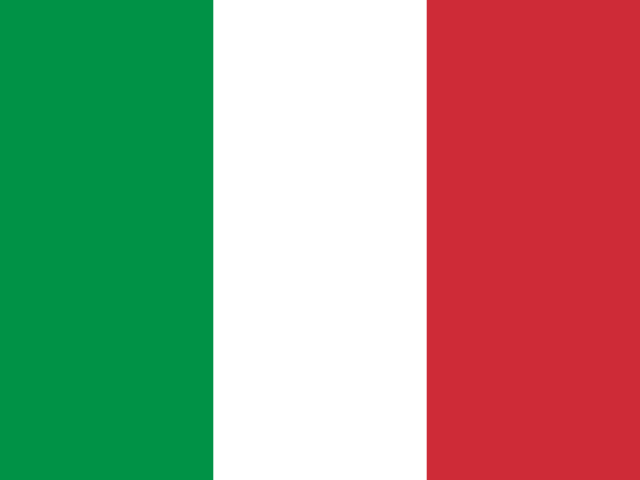
Italy: Adopted in 1797, inspired by the French tricolour rather than created independently by Napoleon. The green, white, and red have been interpreted as symbolising Italy’s landscapes, the snow-capped Alps, and the nation’s long struggle toward unification. |
|
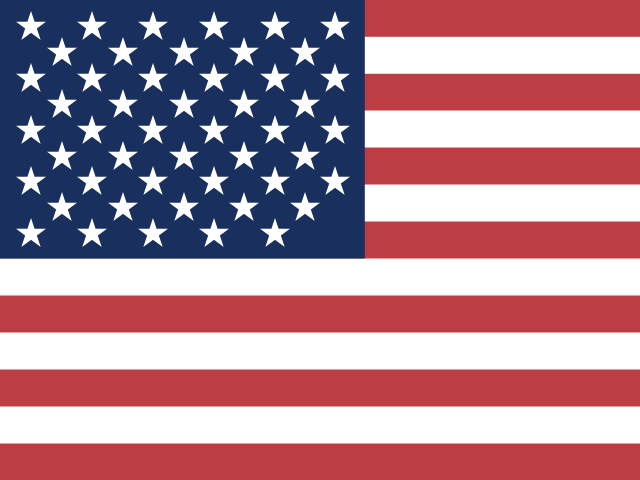
United States: The 13 stripes represent the original colonies, while the stars represent the states, with one added whenever a new state joined the Union. The flag has been revised 27 times since 1777. Its evolving design reflects the country’s growth and makes it one of the most frequently updated national flags in history. |
|
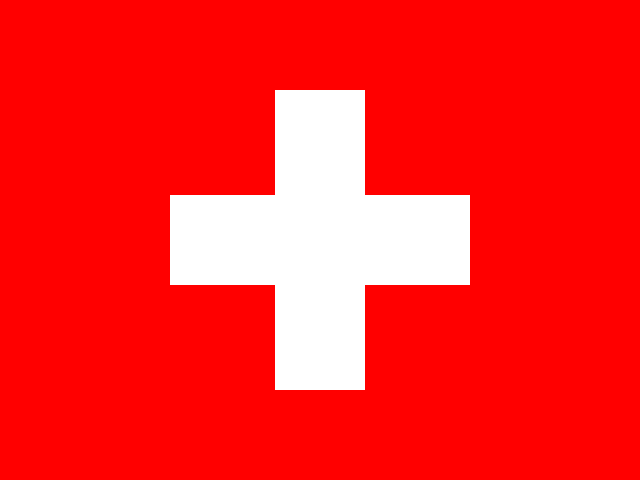
Switzerland: One of only two square national flags, alongside Vatican City. It features a bold white cross on red. Its simplicity and proportions are strongly associated with neutrality, humanitarian values, and the origins of the Red Cross emblem. |
|
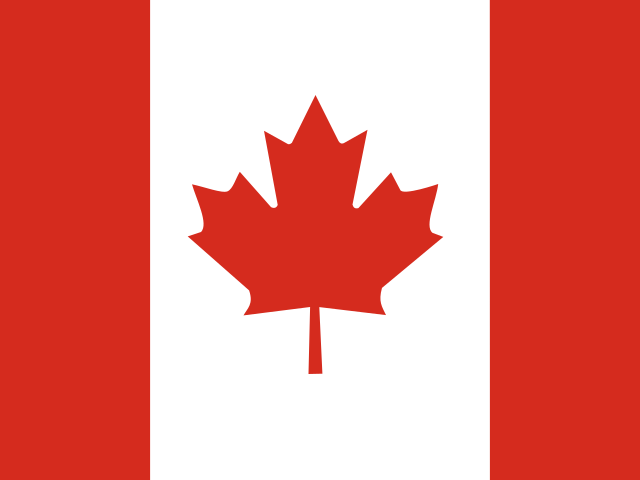
Canada: Adopted in 1965, the maple leaf flag quickly became one of the world’s most recognisable national symbols. The single red leaf represents unity and reflects the country’s forests, natural heritage, and shared national identity. |
|
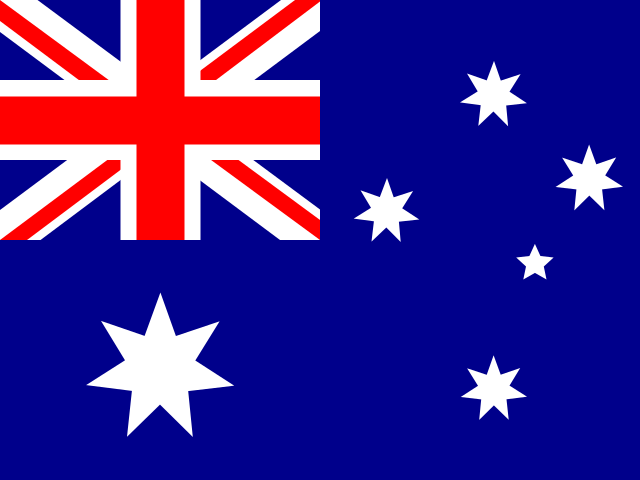
Australia: Combines the Southern Cross constellation with the Union Flag, symbolising both its southern-hemisphere identity and historical ties to Britain. The large Commonwealth Star represents the federation of Australia’s states and territories. |
|
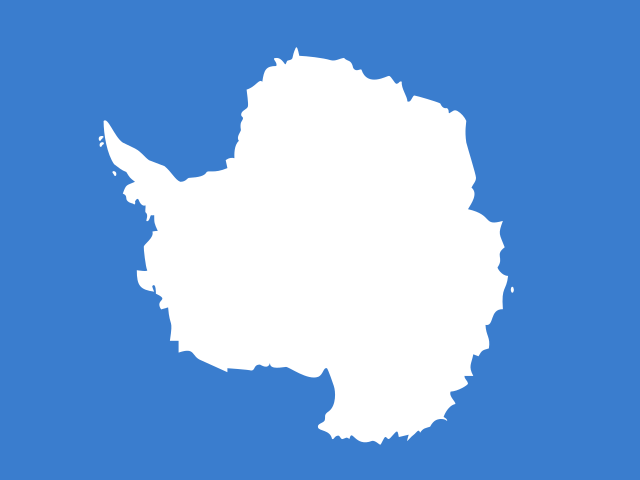
Antarctica: Not a sovereign nation, so it has no official flag. Several proposed designs exist, typically using white or blue to reflect ice, purity, and scientific cooperation. These concepts emphasise international research, environmental stewardship, and the continent’s unique non-national status. |